Imagine conducting a penetration test in January, receiving a detailed report, fixing the identified vulnerabilities, and confidently assuming your organization is secure for the rest of the year. Now consider how many times your environment changes over the next twelve months.
Your development teams release new application features. Cloud configurations evolve. APIs are added to support new integrations. Third-party libraries receive updates, and infrastructure expands to meet growing business demands. Every one of these changes has the potential to introduce new security weaknesses that did not exist during the previous assessment.
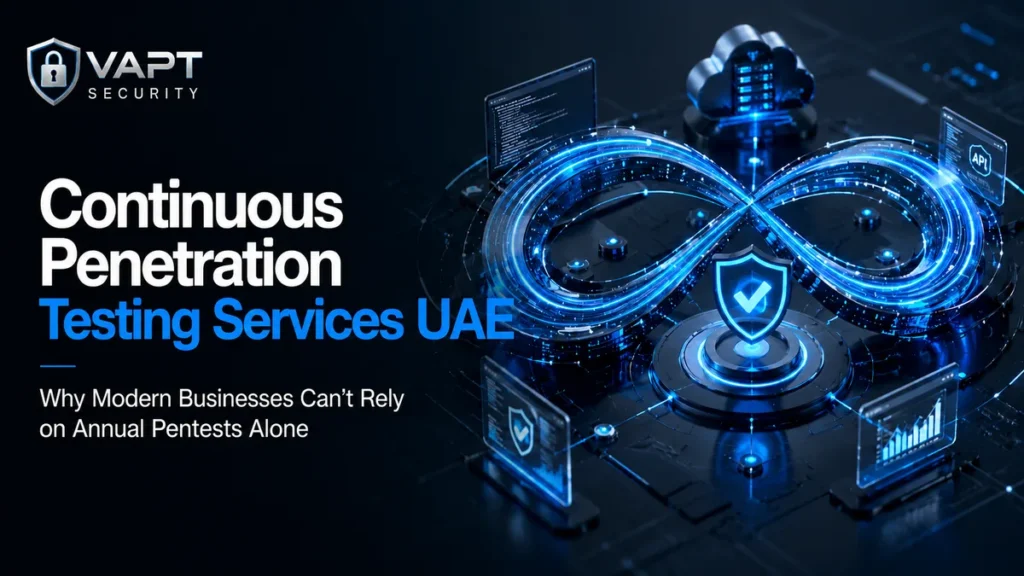
This is why continuous penetration testing services UAE has become an essential part of modern cybersecurity strategies. Businesses across the UAE are moving beyond annual penetration testing toward continuous security validation that keeps pace with today’s rapidly changing technology environments.
Whether you operate a SaaS platform, financial institution, healthcare organization, government entity, or eCommerce business, relying on a single penetration test each year is no longer enough to provide meaningful protection against evolving cyber threats.
At Nathan Labs, continuous security testing is designed to help organizations identify exploitable vulnerabilities throughout the software lifecycle rather than waiting for the next scheduled assessment. This proactive approach enables businesses to reduce risk, strengthen resilience, and maintain confidence as their digital infrastructure evolves.
Every login page, payment gateway, API, and admin dashboard your business runs is a potential way in for an attacker. A vulnerability scanner can tell you a server is missing a patch. What it can’t tell you is whether that missing patch, combined with a weak session token and an overly permissive API endpoint, adds up to a full account takeover. That gap between “vulnerability exists” and “vulnerability is exploitable” is exactly what web application penetration testing is built to close.
For businesses across Dubai, Abu Dhabi, and Sharjah running cloud-native platforms, third-party integrations, and CI/CD pipelines pushing new code weekly, that gap only keeps growing. Whether you’re searching for web application penetration testing UAE or broader VAPT services, the underlying question is the same: can someone actually break in, and what would they reach if they did?
Why Annual Penetration Tests No Longer Match Today's Technology Landscape
Traditional penetration testing remains valuable, particularly for regulatory compliance and periodic security assessments. However, modern business environments have changed dramatically over the past few years.
Today’s organizations deploy software more frequently than ever before. Development teams embrace agile methodologies, cloud-native architectures, microservices, and continuous delivery pipelines to accelerate innovation. While these practices improve business agility, they also create a constantly changing attack surface.
A penetration test performed several months ago cannot evaluate vulnerabilities introduced by yesterday’s application update or this week’s infrastructure change.
This growing gap between rapid development and periodic security assessments creates opportunities for attackers to exploit newly introduced weaknesses before organizations become aware of them.
Continuous penetration testing addresses this challenge by providing ongoing security validation instead of relying solely on fixed testing schedules.
Security Doesn't Break Once a Year; It Changes Every Day
Many organizations still associate cybersecurity with annual audits or compliance requirements. In reality, cyber risk changes whenever technology changes.
Consider a typical enterprise operating in the UAE:
- A new customer portal is deployed.
- An API is integrated with a payment provider.
- Cloud resources are scaled to handle increased demand.
- Development teams release new software updates.
- Infrastructure configurations are modified.
- Third-party services receive automatic updates.
Each change can unintentionally introduce security vulnerabilities, misconfigurations, or authentication weaknesses.
Continuous testing helps identify these issues soon after they appear, allowing security teams to remediate risks before they become exploitable.
Instead of asking, “Are we secure today?” organizations begin asking, “How quickly can we detect new risks after every change?”
That shift in mindset is what makes continuous penetration testing significantly more valuable than traditional point-in-time assessments.
Continuous Penetration Testing Supports Modern DevSecOps Practices
Security is no longer a task performed only before production releases. It has become an integral part of modern software development.
Organizations adopting DevSecOps Security Testing UAE integrate security throughout the software development lifecycle rather than treating it as a final checkpoint.
Continuous penetration testing complements DevSecOps by validating real-world attack paths after applications, APIs, cloud environments, or infrastructure change.
Rather than replacing automated security scans, continuous penetration testing provides deeper security validation by simulating how attackers could exploit complex vulnerabilities that automated tools may overlook.
This approach enables development and security teams to identify high-risk issues earlier, prioritize remediation efforts, and maintain secure software delivery without significantly delaying release cycles.
Why CI/CD Pipelines Require Continuous Security Validation
Modern businesses increasingly rely on automated deployment pipelines to deliver software quickly.
A typical CI/CD Security Testing UAE workflow may include:
- Source code updates
- Automated builds
- Dependency updates
- Container deployments
- Infrastructure changes
- Production releases
While automation improves efficiency, every deployment introduces potential security risks.
A newly deployed API endpoint, cloud permission change, or authentication update may expose vulnerabilities that were absent during previous assessments.
Continuous penetration testing acts as an additional layer of assurance by validating deployed environments after meaningful changes occur, helping organizations detect security gaps before they become business risks.
Instead of discovering vulnerabilities months later during the next scheduled penetration test, organizations receive ongoing visibility into their evolving security posture.
Protecting More Than Applications
Many businesses associate penetration testing exclusively with websites.
Modern cyberattacks target much broader environments.
An effective continuous testing program should evaluate multiple attack surfaces, including:
- Public-facing web applications
- Internal business applications
- APIs
- Cloud workloads
- Identity and access management
- Network infrastructure
- Authentication mechanisms
- Third-party integrations
For organizations operating complex enterprise environments, combining Cloud Security Testing Services UAE, Infrastructure Penetration Testing UAE, and Web Application Penetration Testing in Dubai provides broader visibility into security risks across interconnected systems.
Rather than treating each environment independently, continuous testing helps organizations understand how weaknesses across applications, cloud infrastructure, and networks could be chained together by attackers.
Continuous Testing Is About Business Resilience, Not Just Compliance
Many organizations initially invest in penetration testing because regulators, customers, or industry standards require it.
However, the most mature organizations view continuous penetration testing as a business resilience strategy rather than simply a compliance activity.
Instead of asking:
“Did we pass the security assessment?”
Security leaders increasingly ask:
- How quickly can we identify newly introduced vulnerabilities?
- Which business-critical systems require continuous validation?
- How do we reduce the attack window after every deployment?
- Are our cloud and application environments becoming more secure over time?
Answering these questions requires continuous visibility, not annual snapshots.
Annual Penetration Testing vs. Continuous Penetration Testing
Choosing between an annual penetration test and continuous testing isn’t about replacing one with the other. Annual assessments remain valuable for regulatory requirements, but they provide only a snapshot of your security posture at a specific point in time. Continuous testing extends that value by validating security throughout the year as your environment evolves.
Annual Penetration Testing | Continuous Penetration Testing | |
|---|---|---|
Conducted once or twice a year | Performed continuously based on changes and risk | |
Provides a point-in-time assessment | Provides ongoing security validation | |
Ideal for compliance audits | Ideal for proactive cyber risk management | |
May miss vulnerabilities introduced after testing | Detects new vulnerabilities as environments change | |
Limited visibility between assessments | Limited visibility between assessments | Continuous visibility across the attack surface |
Best for periodic verification | Best for organizations with frequent releases and infrastructure changes |
For businesses that release software regularly or operate cloud-native environments, combining scheduled assessments with continuous penetration testing provides a more resilient and adaptive security strategy.
How Continuous Penetration Testing Works in Modern Enterprises
Continuous penetration testing is not about launching attacks every hour. It is a structured security process that aligns with business changes and evolving technology environments.
A mature program typically includes:
- Identifying critical business assets and attack surfaces
- Monitoring significant application, infrastructure, and cloud changes
- Performing targeted penetration testing after meaningful updates
- Validating remediation efforts through retesting
- Delivering prioritized remediation guidance
- Measuring improvements in security posture over time
This approach helps organizations focus on reducing real business risk instead of simply generating lengthy vulnerability reports.
Building a Layered Security Strategy Beyond Penetration Testing
Continuous penetration testing is one component of an effective cybersecurity program.
To strengthen overall resilience, many UAE organizations combine continuous testing with complementary security capabilities such as secure software development practices, cloud security assessments, incident monitoring, and threat detection.
For example, while continuous penetration testing identifies exploitable weaknesses before attackers can abuse them, a 24/7 Managed SOC continuously monitors security events, investigates suspicious activities, and supports rapid incident response if threats are detected.
These services address different stages of the security lifecycle and work best together as part of a defense-in-depth strategy rather than as replacements for one another.
Industries That Benefit Most from Continuous Penetration Testing
Although every organization can benefit from ongoing security validation, continuous penetration testing is particularly valuable for industries that experience frequent technology changes or manage sensitive information.
Financial Services
Banks, payment platforms, and fintech companies process high-value transactions every day. Continuous testing helps identify vulnerabilities introduced through new digital services, APIs, and online banking applications.
Healthcare
Healthcare providers increasingly rely on connected medical systems, cloud platforms, and patient portals. Continuous validation supports stronger protection of sensitive healthcare data and digital services.
SaaS and Technology Companies
Software companies often release updates weekly or even daily. Continuous penetration testing helps ensure security keeps pace with rapid development cycles.
E-commerce
Online retailers regularly introduce new payment integrations, promotional features, and third-party services. Continuous testing reduces the risk of vulnerabilities affecting customer transactions.
Government and Critical Infrastructure
Organizations managing essential services require continuous visibility into evolving cyber risks to strengthen operational resilience.
Why Businesses in the UAE Are Investing in Continuous Security
The UAE continues to accelerate digital transformation across both public and private sectors. Cloud adoption, AI-driven applications, remote work, and connected business ecosystems have significantly expanded the attack surface.
As organizations modernize, cybersecurity strategies must evolve as well.
Businesses are increasingly looking for security programs that:
- Adapt to rapidly changing environments
- Support secure software delivery
- Reduce exposure between release cycles
- Improve operational resilience
- Strengthen customer trust
- Support regulatory and governance objectives
Continuous penetration testing aligns with these objectives by providing ongoing visibility into emerging risks rather than relying solely on periodic assessments.
Why Choose Nathan Labs for Continuous Penetration Testing Services UAE
At Nathan Labs, continuous penetration testing is designed around real-world business environments rather than one-size-fits-all assessments.
The approach combines experienced security professionals, structured testing methodologies, and risk-focused reporting to help organizations understand what matters most.
Depending on organizational requirements, continuous testing can be aligned with:
- DevSecOps Security Testing UAE
- CI/CD Security Testing UAE
- Cloud Security Testing Services UAE
- Infrastructure Penetration Testing UAE
- Web Application Penetration Testing in Dubai
- API security validation
- Vulnerability verification and remediation support
Rather than delivering reports filled with technical jargon, the objective is to provide actionable insights that help security and development teams reduce risk efficiently.
FAQ
What is continuous penetration testing?
Continuous penetration testing is an ongoing security assessment approach that validates applications, cloud environments, APIs, and infrastructure as systems evolve, helping organizations identify new vulnerabilities throughout the year rather than relying on annual assessments alone.
Is continuous penetration testing better than annual penetration testing?
They serve different purposes. Annual penetration testing supports periodic assessments and compliance requirements, while continuous penetration testing provides ongoing security validation for environments that frequently change. Many organizations benefit from using both approaches together.
Which organizations should consider continuous penetration testing?
Organizations with cloud infrastructure, DevSecOps practices, CI/CD pipelines, SaaS applications, APIs, or frequent software releases are often the strongest candidates because their attack surface evolves continuously.
Does continuous penetration testing replace vulnerability scanning?
No. Vulnerability scanning automatically identifies known weaknesses, while penetration testing validates whether those weaknesses can realistically be exploited and assesses their business impact. Together, they provide a more comprehensive security program.
How often should penetration testing be performed?
Traditional penetration testing is commonly performed annually or after major infrastructure changes. Organizations with rapidly changing environments often complement these assessments with continuous penetration testing to maintain ongoing visibility into new risks.
Final Thoughts
Cybersecurity is no longer measured by how secure an organization was during its last assessment; it is measured by how quickly it can identify and address new risks as technology evolves.
Annual penetration testing remains an important component of every security program, but it is no longer sufficient for organizations operating modern applications, cloud infrastructure, APIs, and continuous software delivery pipelines.
By adopting continuous penetration testing services UAE, businesses can move from reactive security assessments to proactive risk management, strengthening resilience across applications, cloud environments, and infrastructure while supporting long-term business growth.
Ready to Strengthen Your Security Posture?
If your organization is looking to move beyond periodic security assessments, Nathan Labs provides Continuous Penetration Testing Services in the UAE tailored to modern enterprise environments.